Queer Places:
University of Michigan, 1230 Murfin Ave, Ann Arbor, MI 48109
Wellesley College (Seven Sisters), 106 Central St, Wellesley, MA 02481
Fort Hill Cemetery, 19 Fort St Cemetery, Auburn, NY 13021, United States
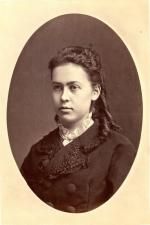 Angie Clara Chapin (April 7, 1855 - August 27, 1937) was born on April 7, 1855, in Auburn, Michigan, to parents Sarah J. Brown and George P. Chapin. An only child, she grew
up in Auburn where her father worked as a grocer. In 1871, Chapin began her post-secondary studies at the University of Michigan, graduating with a Bachelor of Arts degree
in 1875. Her achievement made her one of the earliest women from her hometown to pursue a professional path in higher education and academia. Following her graduation, she
taught in the Literary Department at Flint High School until 1879.
Angie Clara Chapin (April 7, 1855 - August 27, 1937) was born on April 7, 1855, in Auburn, Michigan, to parents Sarah J. Brown and George P. Chapin. An only child, she grew
up in Auburn where her father worked as a grocer. In 1871, Chapin began her post-secondary studies at the University of Michigan, graduating with a Bachelor of Arts degree
in 1875. Her achievement made her one of the earliest women from her hometown to pursue a professional path in higher education and academia. Following her graduation, she
taught in the Literary Department at Flint High School until 1879.
In 1879, Chapin joined the faculty at Wellesley College as a teacher of Greek to address a institutional need for a dedicated classical scholar. She advanced rapidly
through the academic ranks: In 1886 she was appointed as one of the first female commissioners of the American School of Classical Studies in Athens. In 1887 she
achieved full professorship and began her long tenure as head of the Classics Department (serving from 1887 to 1919). In 1901 she was officially designated as Professor of
Greek Language and Literature. In 1906 she became the first female official member of the American School of Classical Studies in Athens. In 1911–1913 she served as the
Acting Dean of Wellesley College.
Described by contemporaries as a devoted classicist, a pioneer of co-education, and an advocate for women's equal rights, Chapin shaped the intellectual growth of
Wellesley's Classics department for decades.
Chapin retired from her formal administrative and departmental leadership roles near the end of the 1910s. In her later years, she lived in various locations, including
Yonkers, New York, and eventually returned to Ann Arbor, Michigan. She passed away on August 27, 1937, and was laid to rest beside her parents in Auburn's Fort Hill
Cemetery.
During the decade spanning 1900 to 1910, Angie Clara Chapin was a prominent senior professor and department head at Wellesley College, placing her at the center of a
unique era in women's higher education that intersects heavily with early LGBTQ history.
Academic environments like Wellesley during the Gilded Age and Progressive Era fostered spaces where professional independent women, unmarried scholars, and female
faculty lived and worked closely together.
Intellectual communities of this period frequently featured "romantic friendships" or "Boston marriages"—long-term, intimate partnerships between women who shared
households, pooled their lives, and built independent careers. While societal and medical views began shifting toward scrutinizing female intimacy by the turn of the
century, women's colleges remained hotbeds for progressive gender roles and tight-knit networks of professional women.
As a senior faculty leader working alongside figures like future president Ellen Fitz Pendleton (who served as Dean
starting in 1901), Chapin belonged to a generation of pioneering female academics whose very lifestyle—eschewing traditional heterosexual marriage in favor of lifelong
dedication to women's higher education—charted the path for early queer history and female autonomy in America.
References:
Other references:
- Wellesley College Archives & Presidential Reports: Records concerning Angie Clara Chapin’s faculty tenure, her leadership as head of the Classics Department (1887–1919), her service as Acting Dean (1911–1913), and administrative developments during the eras of Presidents Alice Freeman Palmer and Ellen Fitz Pendleton.
- American School of Classical Studies at Athens (ASCSA): Historical documentation regarding early female commissioners and managing committee representation, including records of institutional cooperation with Wellesley College and membership milestones from the late 19th and early 20th centuries.
- University of Michigan Alumni Records: Biographical registries, graduation data (Class of 1875), and historical documentation tracking early women graduates entering higher education and academia.
- U.S. Federal Census and Vital Statistics: Decennial census records (tracking residences in Auburn, Michigan; Yonkers, New York; and Ann Arbor, Michigan), vital birth/death registries, and emergency passport application files from 1914 detailing biographical descriptions and travel history.
- The BookLives Project (University of Prince Edward Island / UPEI Provenance Collection): Archival compilations detailing Angie Clara Chapin's life milestones, academic positions, personal libraries, and historical residencies.
- The History of "Boston Marriages" and Academic Communities: Scholarship examining domestic partnerships, professional households, and homosocial networks among female faculty at Seven Sisters colleges (such as Wellesley, Smith, and Mount Holyoke) during the Gilded Age and Progressive Era.
- The Culture of Women's Higher Education (1900–1910): Academic literature analyzing how turn-of-the-century women's colleges functioned as alternative spaces for career-focused, unmarried women, fostering both intense professional collaboration and early queer historical frameworks before the clinical codification of modern sexual identities.
Support this project
This website is a passion project researched, developed, and funded entirely by me. If you find the content valuable and would like to help support the ongoing research and hosting costs, any contribution is deeply appreciated.
Thank you for keeping this independent resource alive!
My books on Amazon: Elisa Rolle's books
BACK TO HOME PAGE
